6 minute read · Hiring and project planning
DIY painting can make sense for a manageable room with sound surfaces, safe access and enough time to learn the application. Hiring a painter becomes worth discussing when preparation, height, detailed woodwork or disruption exceeds what you can comfortably handle. Compare complete tasks, not just the price of a tin of paint.
For a home in Dundalk or nearby, you can enquire before deciding who does every part. Describe what you hope to do yourself and which parts concern you. Agree the boundary before preparation starts, particularly if another person will be responsible for the finished coating.
Skills and preparation the job needs
Begin with the surface rather than your confidence with a roller. A sound wall, a chalky coating, damaged plaster and a peeling bathroom ceiling have different needs. If you cannot identify why a coating failed, another coat is not a useful trial.
The Dulux Trade Advanced Contract Matt specification requires a suitably prepared sound surface and gives specific application instructions. That illustrates why preparation is part of a coating system, not simply a cosmetic extra. Its instructions should not be transferred to another product.
Unknown old coatings need caution before abrasion or removal. Do not use an online DIY comparison as approval to sand material that may be hazardous. Active damp, extensive mould, recurring cracks or damaged substrates need appropriate assessment before deciding who paints.
Application also needs practice: cutting a consistent edge, keeping a wet edge across a wall and applying an even film. A small sample can help you assess the finish you can achieve, but it does not validate adhesion over a defective surface.
Tools, time and access
Write down the full job: clear the room, protect surfaces, prepare, apply each coating, wait as specified, inspect, clean tools and return belongings. Then compare that with the time you actually have. Several short evenings may not suit a continuous wall that needs completing without long pauses.
Access is a separate decision. A high stairwell is not an ordinary bedroom enlarged. Do not improvise platforms or overreach from furniture. The HSA homeowner guidance is a useful reference where work forms part of a wider paid construction project; it is not a DIY access design.
| Your situation | DIY question | Reason to discuss help |
|---|---|---|
| Small sound room | Can you practise and finish complete walls? | Limited time or a finish you cannot achieve consistently. |
| Failed paint | Is the cause established? | Diagnosis and substrate preparation remain uncertain. |
| Detailed doors | Can you prepare the existing finish correctly? | Several components, edges and recoat stages. |
| High stairwell | Is suitable access available? | Access requires competent planning. |
| Occupied whole house | Can rooms stay usable? | Phasing and repeated furniture moves are difficult. |
What you may still need to buy
A realistic DIY budget includes compatible preparation materials, suitable brushes and roller sleeves, trays, protection, cleaning materials and safe access. Some items may already be available; others may have little use after this job. Record actual prices when you buy rather than borrowing a foreign price list.
Separate consumables from reusable tools. Paint quantity depends on surface area, the selected product's coverage and coat system. A cheap tool purchase does not save money if it makes the chosen coating difficult to apply consistently.
Allow for samples and errors without assuming failure is inevitable. You may need another sample, more preparation than expected or a complete-wall repaint if patches show. A DIY choice can still be sensible when those possibilities are acknowledged.
Compare your materials total with a professional quotation only after understanding what each includes. A quote with paint, preparation and woodwork cannot be compared with a DIY shopping list for walls alone. Your time and the household disruption are separate considerations, even though neither appears on a shop receipt.
Deciding which parts to discuss with a painter
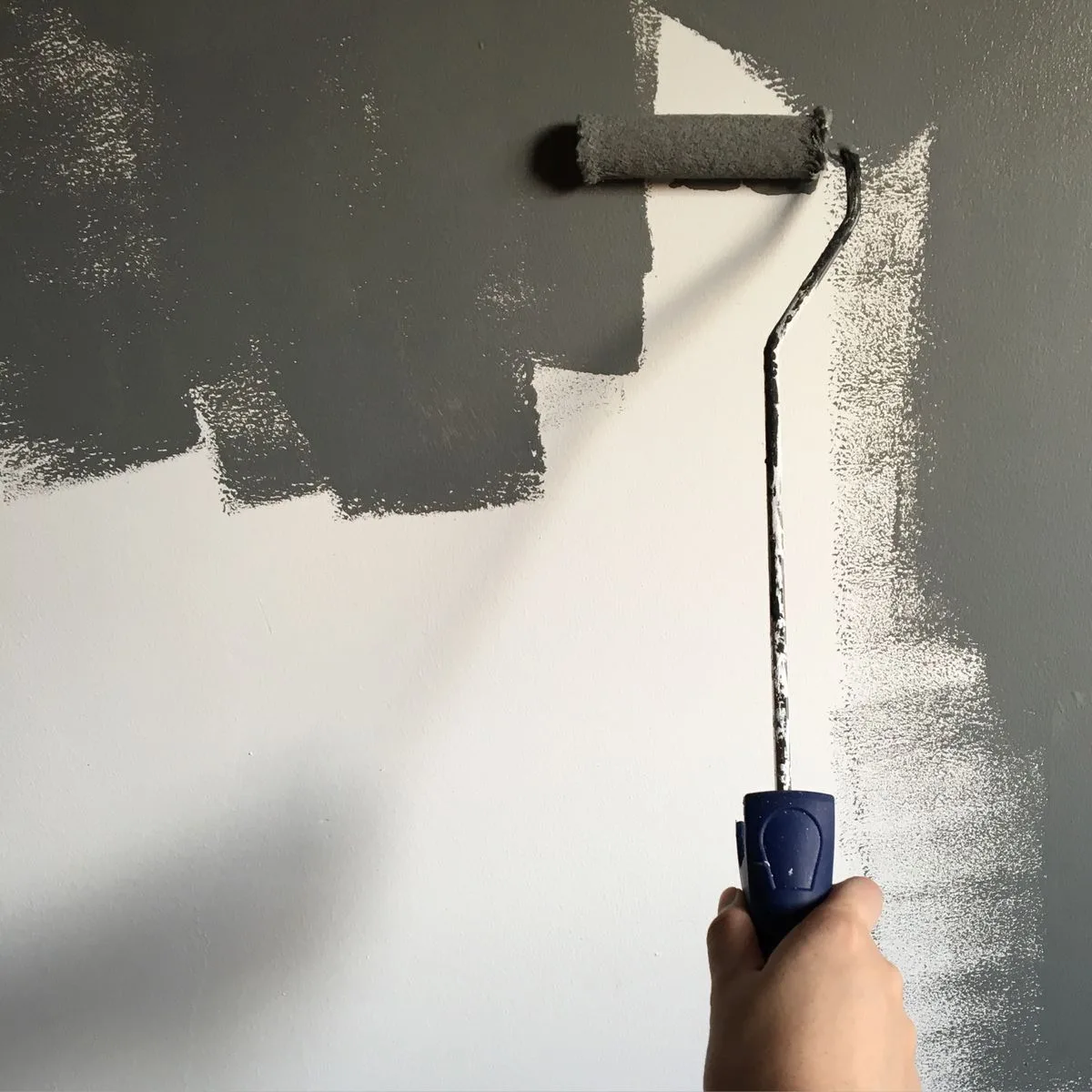
A split scope needs explicit agreement. You might clear small belongings while a painter carries out agreed surface preparation and coating. You might paint a straightforward spare room while enquiring about a stairwell. Do not assume a painter will accept responsibility for coatings over uninspected DIY preparation.
Hypothetical decision: a homeowner wants a bedroom and a tall stairwell refreshed. The bedroom has sound paint and accessible walls; the stairwell has unknown peeling and difficult access. They can consider the bedroom separately, while requesting assessment of the stairwell. The different risks justify separate decisions without treating the entire home as one DIY challenge.
Your decision checklist
- Can you identify the substrate and current finish?
- Is there a defect needing investigation first?
- Can you access every surface safely?
- Can you follow the exact product system?
- Do you have complete-wall working time and storage?
- Would a partial scope give a practical finished result?
If a question remains unresolved, resolve that question before buying a full coating system. The choice is about the actual work and your circumstances, not a universal claim that DIY always saves a fixed amount or professionals always finish in a fixed time.
Continue with Interior painting cost in Dundalk, Preparing your home for painters. Our interior painting service in Dundalk explains the work you can enquire about.
Compare your usable working time
Make a realistic diary rather than counting the whole weekend as application time. Clearing, protection, preparation, waiting and cleanup occupy different parts of it. Note when the room must return to daily use and whether you can complete whole walls without interruption.
If you have only short evening slots, a small isolated room may be easier to organise than connected living spaces. That is a practical scope question, not a judgement about your ability. Choose a project whose preparation and room-use requirements fit the time available.
Questions about the DIY decision
Will DIY always save money on one room?
It may reduce the labour you pay for, but calculate the complete materials and equipment needed for the same scope. Include preparation and any access requirements. Your time and disruption are separate considerations. A simple room and a room with unknown failed coatings should not share the same assumption.
Can I do the preparation and hire someone for the final coat?
Only by agreement. The person responsible for the coating may need to inspect the background and specify what preparation is acceptable. Explain exactly what products and work you propose. Do not assume a final-coat price includes responsibility for uninspected filling, sanding or priming already carried out.
Is a stairwell a sensible first DIY project?
Height and access require a separate assessment from painting skill. Do not improvise equipment or copy an ordinary bedroom setup. If you cannot access every surface safely with suitable arrangements, resolve that before deciding who applies the coating. Photos should also be taken from safe positions.
Interior painting: discuss your surfaces and scope. Contact the team with your area and photographs.