
6 minute read · Exterior painting
Pebbledash and smooth render can both be painted when the surface is suitable, sound and compatible with the selected masonry system. The main difference is texture: rough dash has recesses and a larger effective surface area, so coverage and application differ from a flatter wall. Painting changes colour, not the underlying shape of the wall.
Identify the actual finish before asking for a quote. A rough-looking wall could be dry dash, roughcast or another render system. A smooth wall may be traditional cement render or a modern proprietary finish. The correct specification starts with that identification, not with a generic "outside paint" label.
Identify rough and smooth masonry
Pebbledash usually has visible aggregate set into the surface. Roughcast is a different construction, though the two names are often used loosely in enquiries. Smooth render has fewer recesses, but still varies in porosity, previous coating and condition. You do not need to know the exact trade term to begin: clear close-up and elevation photographs are useful.
Record whether it has been painted before. A first opaque coating on unpainted dash changes its appearance and future maintenance. Repainting an established coating has the separate question of whether the retained layers are sound. Do not assume the same preparation simply because both walls have pebbles.
| Surface | What remains after painting | Key specification question |
|---|---|---|
| Sound unpainted dash | Aggregate shape and recesses | Is the identified substrate approved and ready? |
| Previously painted dash | Existing texture and retained coating edges | Is adhesion sound within the recesses? |
| Smooth painted render | Flatness, repairs and some surface texture | Will patches and old layers be suitable to retain? |
| Modern coloured render | Manufacturer-specific finish properties | Does its supplier approve overcoating? |
| Damaged or hollow render | The defect unless properly repaired | Who assesses and repairs it before decoration? |
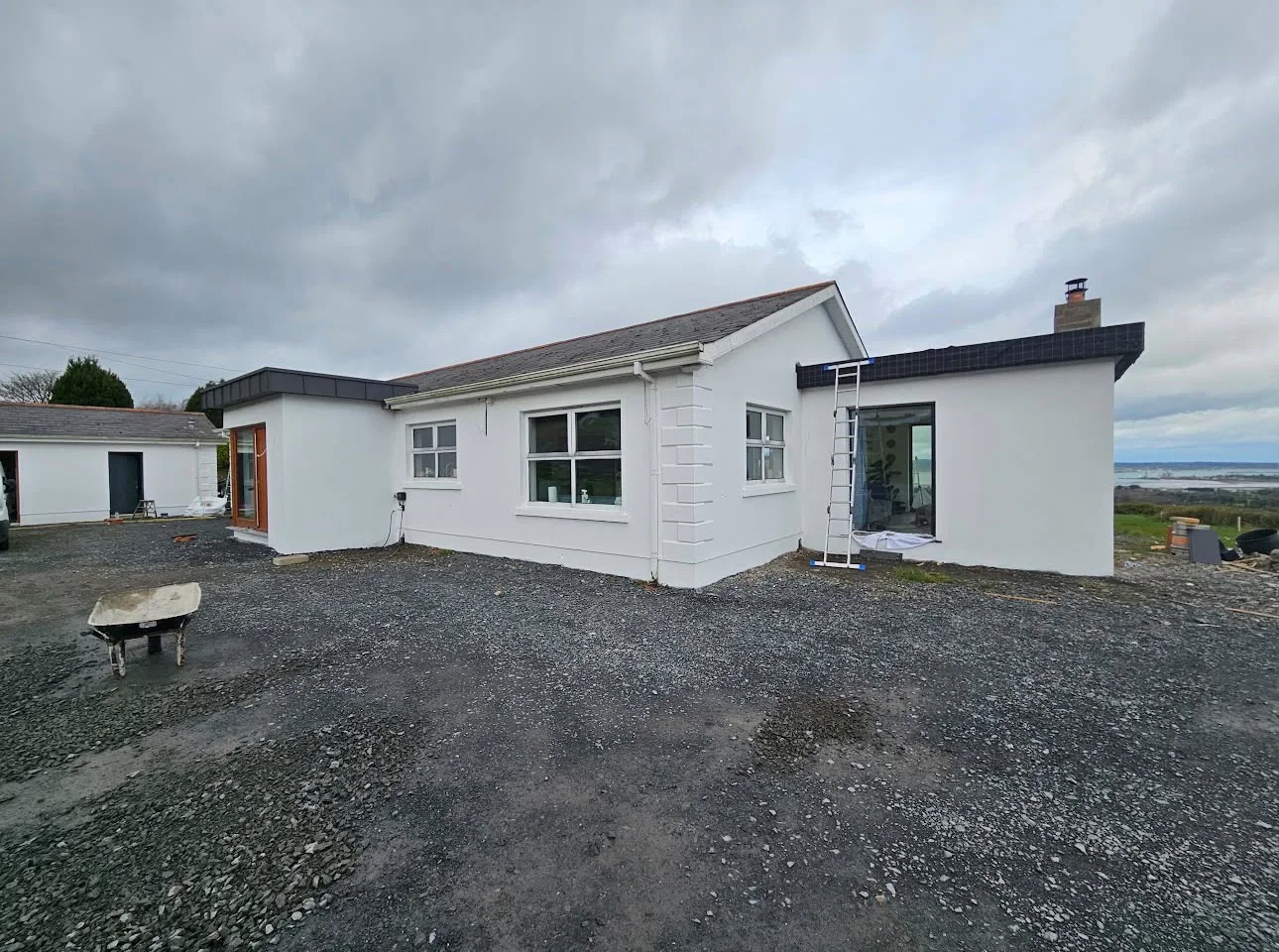
Assess condition before choosing a system
Inspect for loose aggregate, flaking paint, cracks, staining and areas that appear hollow or unstable. These are not all painting defects. If the wall itself is unsound, applying a thicker coating does not restore its attachment. Significant or recurring defects need appropriate assessment before the decorative scope is finalised.
The Dulux Trade Weathershield Smooth Masonry technical sheet includes roughcast and pebbledash among its stated uses, subject to the surface conditions and restrictions in the document. "Smooth" in that product name describes the paint finish, not a promise to flatten a dashed wall.
Do not assume every masonry paint is compatible with every previous coating. Specialist mineral, lime-based and proprietary render systems can require specific advice. The masonry paint selection guide explains how to compare substrate permissions rather than selecting by brand reputation alone.
Where flaking returns near a gutter, sill or ground-level band, investigate that pattern. Cleaning the visible growth or covering the affected paint may not address the moisture condition. A current coating sheet is a specification aid, not a building survey or damp assessment.
Texture, application and coverage
A textured wall has peaks, recesses and edges. A roller may reach the prominent areas while leaving small shadows uncoated; detailing may be needed to achieve the intended coverage. Choose tools permitted by the product and suited to the surface rather than assuming one roller or a spray method always gives the best result.
The Dulux Trade professional products guide lists different coverage examples for smooth low-porosity render and textured low-porosity pebbledash. That is the useful lesson: the headline maximum on a tin is not a reliable estimate for every rough wall. Confirm current product data and a representative trial where necessary.
A hypothetical quantity comparison makes the difference visible. For this named Dulux Trade product, its technical sheet gives up to 16m² per litre on low-porosity smooth render and 4-6m² per litre on low-porosity pebbledash. On a 30m² face, one coat therefore gives an arithmetic estimate of 30 ÷ 16 = 1.875 litres at the smooth maximum, versus 30 ÷ 6 to 30 ÷ 4 = 5-7.5 litres for the textured guide range. This is not a purchase list or quote: actual porosity, coat specification, details and trial coverage can change the quantity. The sheet itself calls the figures approximate.
Paint does not turn dash into render. A textured paint can introduce its own granular finish, but it should not be used to hide loose material or bridge an unresolved moving crack. If you want a truly smooth wall, that is a separate building or rendering project, with its own suitability and responsibilities.
Protection also changes with the setting. Rough walls beside windows, paving and planted beds need a clear plan for splashes and access. Spraying is one possible product-approved method in some systems, not an advertised team capability or a reason to accept overspray.
Ask the right quote questions
Describe the elevations, the known surface and the desired colour change. Include plinths, sills and reveals separately. For a mix of dash and smooth render, ask for those areas to be distinguished so coverage and preparation assumptions remain visible.
- What substrate and existing coating are being allowed for?
- Which defects must be assessed or repaired first?
- How will loose material and retained coating be handled?
- Which named finish and any primer are proposed?
- What coverage assumptions suit the actual texture?
- Which details, access and protection are included?
- Are any repairs, neighbouring access or specialist surfaces excluded?
Read the exterior preparation guide for the survey-to-specification sequence. If a garden wall is part of the same enquiry, use the boundary wall guide too: free-standing and retaining walls can have moisture conditions different from the house itself.
For exterior painting in Dundalk and nearby areas, these details make the initial discussion clearer. Photographs help identify the task; an on-site assessment may still be needed to determine adhesion, soundness and safe access.
Keep the sample representative
A useful coverage trial includes the depth and absorbency of the real texture, not only its easiest flat edge. Record the measured trial area and material used so the estimate can be adjusted transparently.
Practical questions
Will smooth masonry paint make pebbledash smooth?
No. It changes the coating finish and colour while the aggregate shape remains. Deep recesses and raised stones remain part of the wall. If a flat rendered appearance is wanted, assess that as a separate building project rather than expecting extra paint to level the surface.
Can loose pebbles be secured with paint?
Do not rely on paint to restore unsound aggregate or render. Assess what is loose and why, and establish repair responsibilities before decoration. A coating needs a suitable retained base. Covering unstable material can hide the defect while leaving the underlying attachment problem unresolved.
Why can two equal walls need different quantities?
The measured face area does not describe every recess or its absorbency. Roughness, porosity and previous coating affect practical coverage, while profiles and details add work. Use the selected product's texture-appropriate guidance or a representative trial rather than assigning every wall the maximum smooth-surface rate.
Exterior painting: discuss your surfaces and scope. Contact the team with your area and photographs.