6 minute read · Preparation and surface problems
Interior paint peels when the coating system loses its hold on the layer beneath. Moisture, contamination, a weak background, incompatible coatings or application conditions can contribute. The useful first step is to identify where the failure is happening and what changed, rather than immediately covering it again.
If a wall or ceiling in your Dundalk home keeps failing, photograph the pattern and record its history. A close-up shows the coating; a wide view shows nearby windows, ceilings, bathrooms and repairs. Neither image alone proves the cause.
Describe where the paint is failing
Record the room, surface, location and extent. Is the failure at one repair patch, throughout the ceiling or near an outside corner? Did it appear while a recent coat dried, after cleaning or months later? Has the same area failed before?
Distinguish flakes, sheets, powder and blisters in your description. A film lifting from a sound-looking old layer presents a different question from paint coming away with a powdery background. Avoid pulling more material away simply to investigate an unknown coating.
Benjamin Moore's flaking-paint guidance identifies several possible causes, including preparation, film thickness and ageing. It also warns about hazardous dust from old paint removal. Its US repair instructions are not a substitute for assessing an unknown coating in your home.
Keep any old product records and repair information. A recently painted area that fails differently from its surroundings can reveal a boundary worth investigating. The aim is to preserve useful evidence before making-good obscures it.
Check moisture and surface soundness
Look for associated observations: a growing stain, recurring damp after rain, moisture near plumbing, condensation on nearby glazing or soft substrate. These are reasons to investigate, not a diagnosis from appearance.
If the ceiling is sagging, visibly damaged or actively leaking, keep clear of the affected area and arrange appropriate help. Decoration is secondary. Do not prod a damaged ceiling or treat a stain-blocking coating as repair.
Soundness also matters where moisture is not obvious. A weak old layer, chalky residue or friable repair can prevent a new system performing properly. The suitable treatment depends on the material, not only the visible area of peeling.
| Observed pattern | Question to investigate | Do not conclude |
|---|---|---|
| Failure around one patch | Different background, preparation or absorption? | Every wall needs stripping. |
| Peeling with a water mark | Is moisture active or historic? | A stain blocker repairs the cause. |
| New coat lifting from old sheen | Compatibility and preparation? | All water-based coatings are unsuitable. |
| Powder under failed film | Weak substrate or residue? | Another finish coat will bind it. |
| Widespread aged cracking | Condition of the complete coating build-up? | Every crack is structural. |
Existing coating and adhesion questions
Identify the previous finish where possible: wall emulsion, gloss, varnish, wallpaper or a specialist coating. The new system needs a sound compatible background. A general primer is not automatically suitable for every old finish.
Adhesion tests and trial areas can help a competent assessment, but casual tape pulling is not a universal test method and can disturb unknown old coatings. Agree any test with reference to the proposed system. A small successful patch cannot guarantee the condition of a whole room with mixed backgrounds.
Ask what layer is being retained, what preparation is proposed and what condition must be achieved before recoating. The final colour is less important at this stage than whether the retained system is stable.
Do not cover loose edges with a heavier coat to try to hold them down. An opaque film can hide a visual defect while leaving the underlying failure unresolved. Likewise, a smoother-looking patch is not proof that its edges or background are sound.
When preparation needs specialist assessment
Unknown older coatings, textured materials, suspected hazardous substances, extensive damp or damaged substrates may need a specialist before ordinary decorating can be scoped. This guide gives no removal procedure for hazardous coatings.
Recurring cracks, movement around openings and repeated failure after repair also deserve a broader assessment where the cause is uncertain. A painter can describe coating condition without establishing the structural performance of a wall.
For mould and moisture, use the mould and damp decision guide and arrange appropriate investigation. Painting services do not imply remediation, plumbing or structural repair.
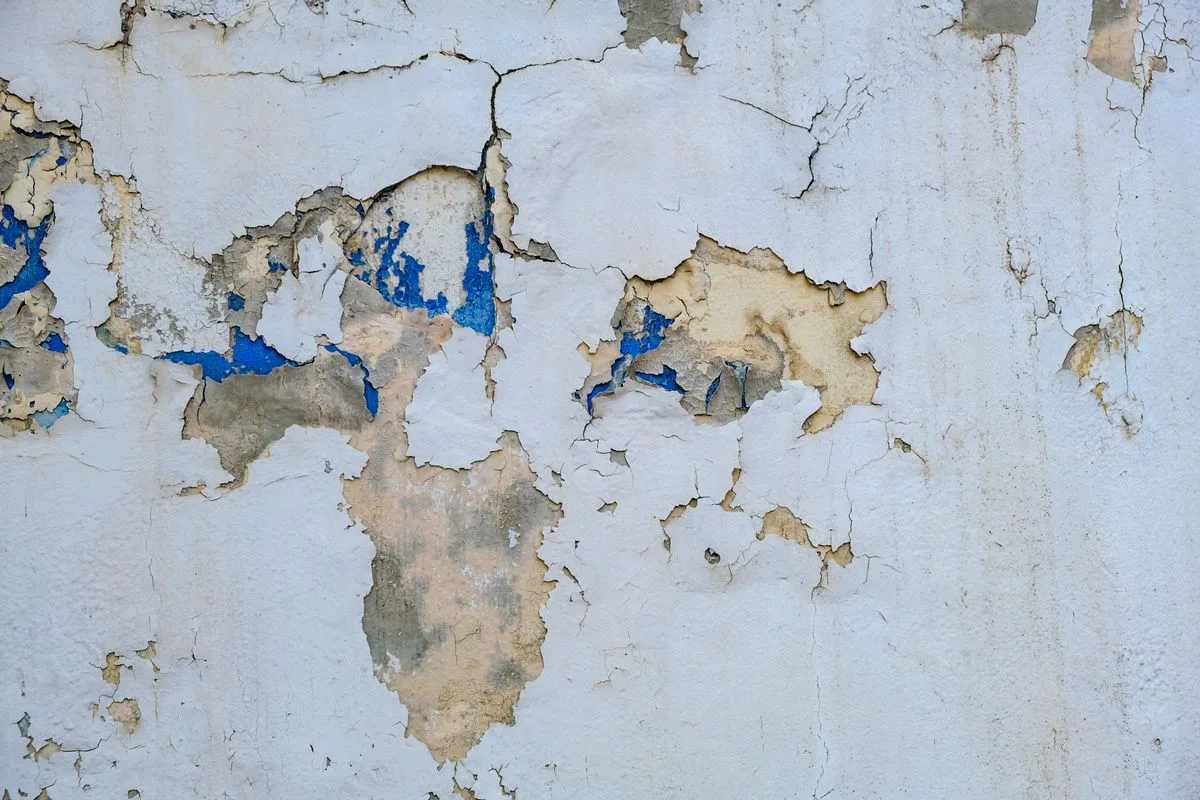
Bubbling and blistering: distinguishing adhesion or moisture concerns
A bubble is a raised area of film; it is an observation rather than a reliable cause label. It may appear during application or later, and associated moisture history matters. Do not burst it simply to decide whether water is present.
Record whether bubbles appeared only in a recent coat, around a previous patch or across an older surface. Note recent cleaning, steam exposure, leaks or heating changes. The person assessing the wall can then decide what inspection is appropriate.
Two contrasting scenarios
Hypothetical example A: a newly painted wall lifts only over a filled chase. The useful questions concern the repair material, readiness, dust and first-coat treatment. A whole-house damp diagnosis would go beyond that evidence.
Hypothetical example B: a bathroom ceiling repeatedly blisters beside a growing stain. The moisture source and substrate need assessment before a decorating system is chosen. Copying the first scenario's preparation would not resolve the outstanding question.
What to send for an assessment
- Room and exact surface location.
- Wide view and close-up from a safe position.
- First occurrence and recurrence history.
- Known coating, cleaning or repair history.
- Leak or moisture information and any completed repairs.
- Whether the surface feels or looks damaged, without probing it.
A useful outcome is a defined route: investigate first, assess the coating system, or agree ordinary preparation once the background is established. It is not a guaranteed diagnosis from one photograph.
Continue with Painting over water stains, Primer versus undercoat. Our interior painting service in Dundalk explains the work you can enquire about.
Questions about failed interior coatings
Can I just paint over a small peeling patch?
Only after the cause and retained background have been assessed and appropriate preparation is agreed. A small visible area can still sit over a wider weak layer, while a local defect does not automatically require stripping the whole room. Size alone does not select the treatment.
Do bubbles always mean a leak?
No. Bubbling is a symptom that can have several coating or background questions behind it. Record timing, position, repair history and associated moisture observations. Avoid bursting bubbles or assuming the cause from one picture. An active or uncertain moisture issue needs appropriate investigation before decoration.
Will an adhesion primer stop every future failure?
No primer can guarantee performance over an unresolved defective background or outside its specified conditions. Identify what it is intended to bond to and which layers remain. Active moisture, weak material and incompatible residues must be considered separately from the product claim.
Interior painting: discuss your surfaces and scope. Contact the team with your area and photographs.