
6 minute read · Woodwork and coating choices
Choose satin, eggshell or gloss for the appearance you want, then check that the particular product suits the woodwork and its level of use. Eggshell usually gives a softer low-sheen appearance, satin sits between low sheen and gloss, and gloss gives the strongest reflections. The finish name alone does not establish durability, yellowing or compatibility.
For doors, skirting boards and panelling, compare the actual coatings on a representative sample in the room. A colour card cannot show how light will travel along a moulding. This guide separates the visual choice from the product specification so an interior painting enquiry can describe both.
Compare appearance and sheen
| Finish family | How it tends to look | Where a sample helps most |
|---|---|---|
| Eggshell | Soft reflection that keeps detail quieter | A broad door face beside a matt wall |
| Satin | A noticeable sheen without the strongest gloss reflections | Skirting and architrave running into adjoining rooms |
| Gloss | Clear highlights and a more reflective surface | Detailed profiles and surfaces seen in side light |
These are descriptive families, not universal numerical bands. Manufacturers use different formulations and measurement conventions. Two tins called satin can look different beside each other. Even the same colour can look deeper or brighter when the finish reflects more light.
Reflection changes how defects are noticed. A long highlight across a door can reveal an uneven patch that was inconspicuous in a flatter finish. Lower sheen can reduce the visual emphasis, but it does not repair dents, loose coating or rough preparation. Decide whether you accept the underlying texture before using a finish to soften it.
Think about continuity through the home. A new low-sheen door beside an existing glossy frame can be deliberate, but it should be a choice. If only one room is being repainted, look at the transition at the doorway rather than judging the new finish on a sample board by itself.
Product performance versus finish names
A high sheen is not proof of the most durable available product. Compare the manufacturer's stated use, cleaning resistance, substrate, primer system and curing guidance. Water-based and solvent-based products can both be described as satin or gloss. Binder choice belongs alongside sheen rather than being inferred from it.
The Crown Trade Fastflow Quick Dry Eggshell page identifies a water-based low-sheen finish with its own application and recoat information. Its wording is specific to that product. It does not establish that every eggshell is water-based or has the same working time.
The Dulux Trade Diamond Eggshell information describes a cleanable coating and names its intended surfaces. This is a useful reminder that performance claims and substrate permissions come from a formulation, not from the word eggshell alone. Check the current local sheet before selection.
Avoid importing "semi-gloss" and "latex" recommendations from an overseas article without checking their local equivalents. Familiar terms can describe different product categories. If the specification simply says "eggshell", ask for the exact product and where it is intended to go.
Cleaning and wear on trim
Different parts of the room receive different treatment. Door edges meet stops, handles attract contact marks and low skirting boards meet shoes or cleaning equipment. A picture rail may receive very little contact. Match the product to those demands rather than choosing a finish for the whole house solely from a trend photograph.
Cleaning instructions matter after the coating has cured. A finish described as washable is not permission to scrub immediately after painting or to use any solvent cleaner. Keep the product details and follow its advice on normal cleaning and the initial curing period. Repeated abrasion can alter sheen even where the colour remains.
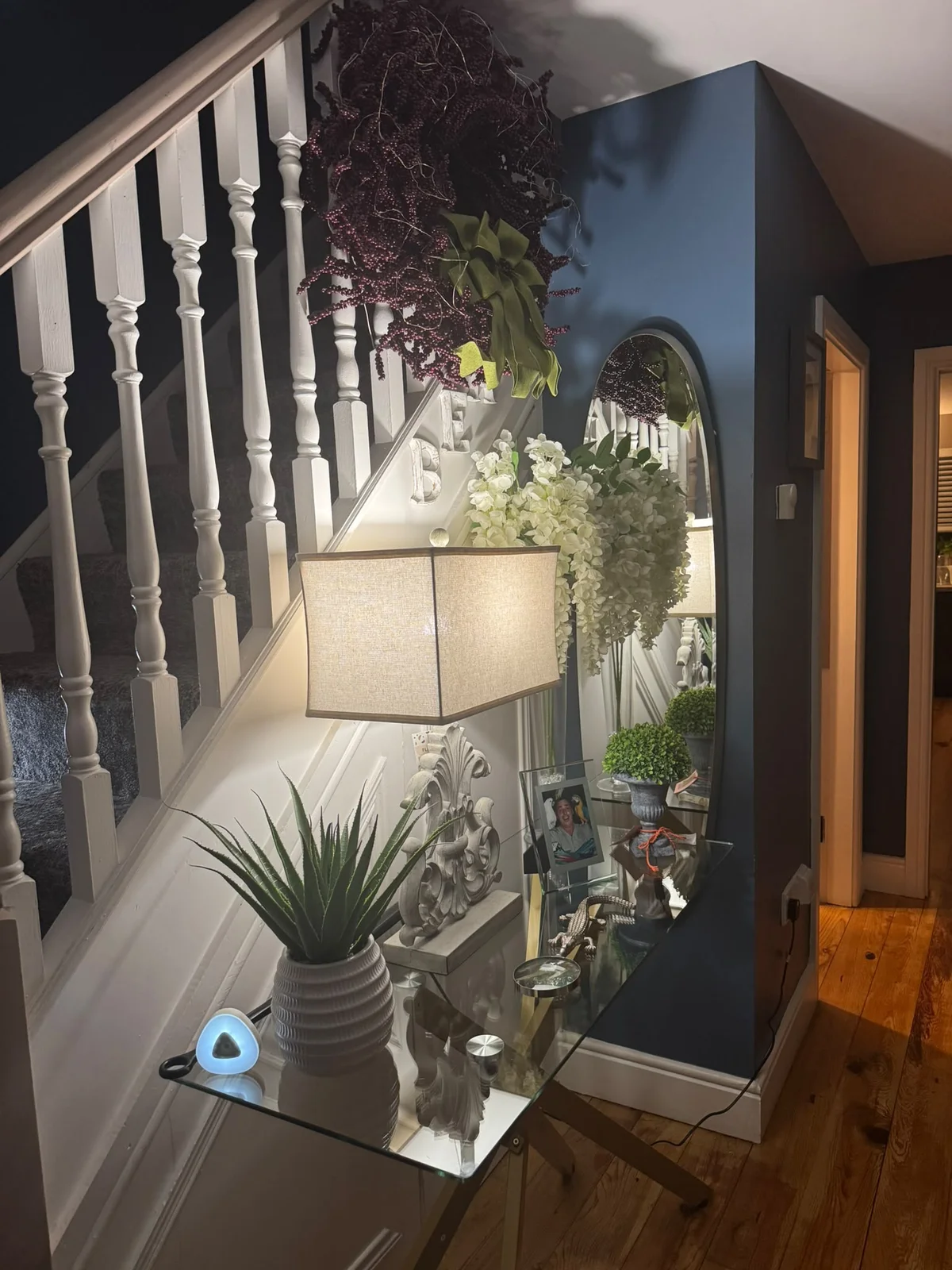
For a hypothetical hall, the priorities might be easy cleaning on door frames, a quiet appearance on panelling and consistency with the stairs. Start by testing one compatible low- or mid-sheen trim system in those positions. If it meets the appearance and maintenance needs, there may be no reason to specify three different sheens. If not, make the variation intentional and record it.
A wall eggshell and a woodwork eggshell should not be treated as interchangeable merely because their names match. Some named products permit several substrates; others do not. Use the wall-finish comparison for walls, and keep this page's decision centred on joinery.
Match samples to the existing surfaces
Use a sound timber offcut or a suitable prepared sample with a similar profile to the intended woodwork. Record the exact product, colour and finish on the back. If comparing whites, place the samples against the actual wall, flooring and existing doors. A bright white can make an older warm white appear more yellow by comparison.
- View the sample in daylight and under the room's normal lamps.
- Move it from a broad door face to a skirting or moulding position.
- Look along the surface as well as straight at it.
- Compare it beside adjoining rooms and the stair rail.
- Allow the sample its stated drying time before judging the sheen.
- Confirm whether the same product is approved for each intended surface.
For decorative panelling, the panelling styles and finish guide helps connect the profile to the rest of the room. For metal heating surfaces, read the educational radiator and pipework guide separately; trim suitability alone does not establish a radiator specification.
The practical decision is a short written description: which surfaces, what appearance, which named coating and what preparation system. If an existing layer is chipped or peeling, resolve that first. A beautifully chosen sheen cannot compensate for unsound paint underneath.
Record the finish as well as the colour
Write the manufacturer, exact product name, colour reference and sheen on the final sample. A note saying only "white satin" is unlikely to support a reliable future match. Keep the sample somewhere it can be compared without confusing a different product or an older room finish.
Practical questions
Can I match a new satin to old satin by name?
Not reliably from the finish name alone. Formulation, ageing, colour and application can change the appearance. Compare the exact candidate product on a representative sample beside the old surface. If continuity matters, consider where a natural full-component boundary would be preferable to a small visible patch.
Does lower sheen remove brush marks?
It can make reflections less prominent, but it does not remove physical texture or repair uneven coating. Preparation and product-appropriate application still matter. View the sample along the surface in ordinary side light so you can judge the actual finish rather than assuming a flatter sheen hides everything.
Can the same finish be used on walls and skirting?
Only if the particular product approves both substrates and the intended use. A shared word such as eggshell does not establish that permission. Compare product data and maintenance requirements separately, then decide whether the resulting sheen relationship is what you want in the room.
Interior painting: discuss your surfaces and scope. Contact the team with your area and photographs.